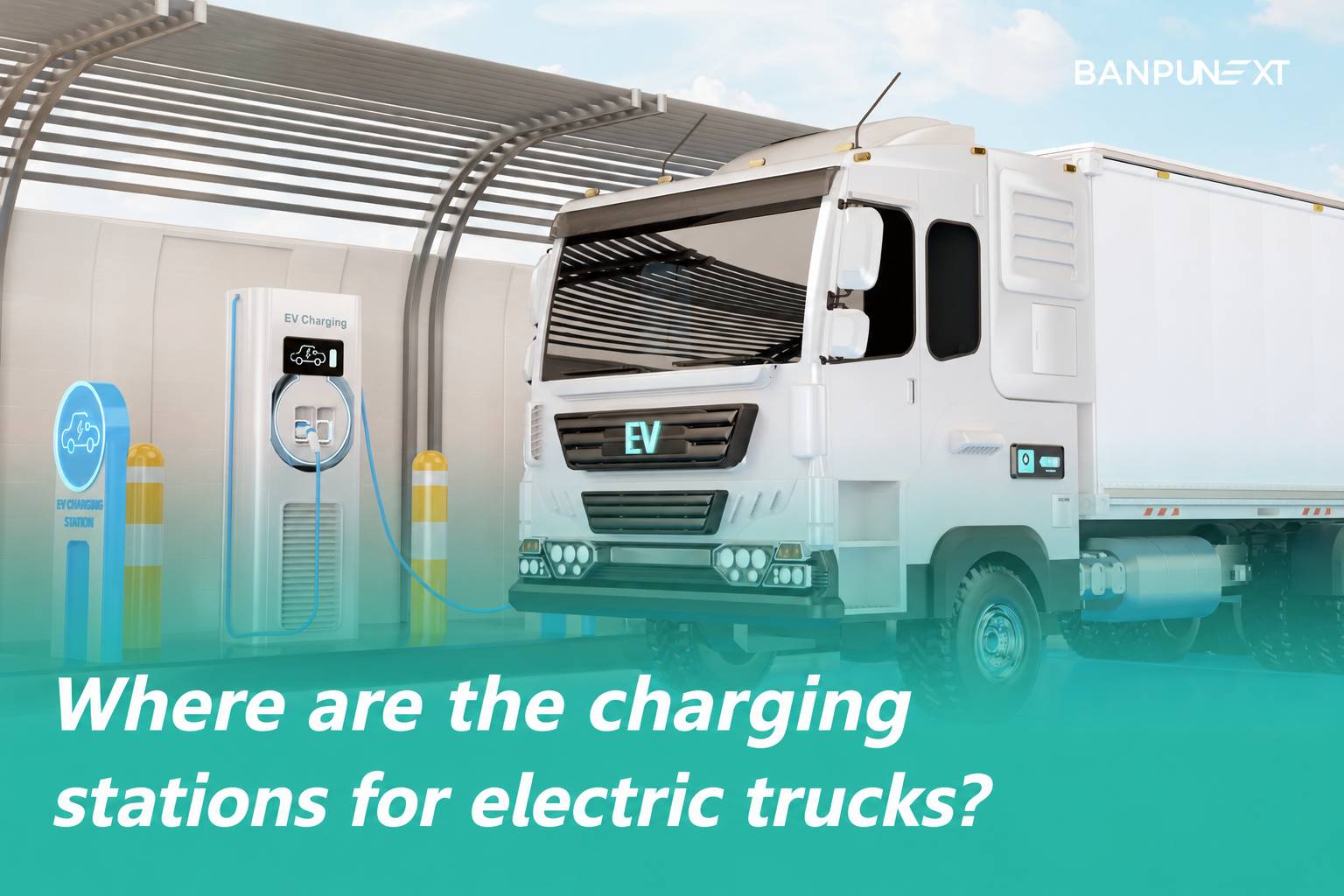
As Thailand’s logistics sector increasingly adopts electric trucks (EV Trucks) to reduce long-term costs and meet ESG goals, the challenge is no longer just “where to charge,” but how to plan to charge efficiently without disrupting operations. Fleet charging for heavy-duty EVs require careful consideration — from locations aligned with transport routes and high-capacity DC Fast Charging to truck-friendly station layouts and EV Fleet Management systems that help reduce downtime and optimize operations.
This article explores EV truck charging stations across Thailand in 2026, along with key considerations for selecting charging solutions that support smooth, efficient commercial operations.
What Type of Fleet Charging Supports Heavy-Duty EV?
Although EV charging stations in Thailand are expanding rapidly, searching for a “charging station near me” through general applications may not always meet the needs of electric truck operators. Commercial EV trucks have very different charging requirements from passenger vehicles — including higher power capacity, larger parking space, and longer charging durations.
As a result, standard charging stations may not be able to support heavy-duty commercial operations efficiently.
Limitations of Current Fleet Charging
Most charging stations today are primarily designed for passenger EVs, creating key challenges for heavy-duty EVs. Common limitations include narrow parking spaces, turning areas unsuitable for large vehicles, and charging power that may not be sufficient for trucks with significantly larger battery capacities. As a result, charging can become inefficient and more time-consuming than expected.
DC Fast Charging for Commercial Operations
One of the most important features of fleet charging for heavy-duty EV trucks is DC Fast Charging, which provides high-power charging to significantly reduce charging time. This is especially critical for logistics businesses that require continuous operations and cannot afford long vehicle downtime. Fast charging systems help improve operational efficiency and minimize downtime across EV fleets.
Charging Station Design for Heavy-Duty Vehicles
Fleet Charging for electric trucks must be specifically designed to accommodate large vehicles. This includes wider parking bays, sufficient turning radius for large trucks and trailers, and layouts that allow smooth entry and exit. Stations should also support simultaneous charging for multiple vehicles to handle the demands of commercial EV fleets efficiently.
EV Fleet Management Systems
Effective fleet charging also requires smart EV Fleet Management systems to control and optimize charging activities. Features such as charging schedules, queue management, and energy usage monitoring help businesses improve fleet efficiency, reduce waiting times, and better manage operational costs.
Banpu NEXT Fleet Charging Solutions for Uninterrupted Heavy-Duty Transport
One of Banpu NEXT’s Net Zero Solutions is Fleet Charging Solutions, a charging station solution designed for commercial vehicles. The service is divided into 2 main models:
- Route Charging: stations along logistics routes
- On-site Charging: installations within business premises
Route Charging Along Logistics Routes
Banpu NEXT provides a network of charging stations specifically designed to support electric trucks and all types of commercial EVs, enabling more continuous charging along logistics routes. The network currently covers Bangkok, surrounding metropolitan areas, and key transportation corridors across Thailand.
The service currently operates 9 charging stations, with plans to expand to 50 stations in the future to support the growing adoption of electric logistics fleets. These stations are purpose-built for fleet operations and feature:
- High-power DC Fast Charging systems for heavy-duty vehicles
- Simultaneous charging support for multiple vehicles
- Advanced booking systems to reduce waiting time and improve fleet continuity
- Fleet management systems designed for enterprise operations
In addition, the solution includes business support features such as Fleet Cards, corporate credit systems, and a Monitoring Platform that enables real-time charging tracking and energy cost management. Charging rates start from THB 5.5 per kWh, helping businesses manage and forecast energy costs more effectively.
Current Heavy-Duty Fleet Charging Network
The Route Charging network currently covers 9 key locations across Thailand, including Bangkok, surrounding provinces, and major logistics corridors such as Phahonyothin Road, Mittraphap Road, and Motorway No.7 (Bangkok–Chonburi), including:
- Fleet Charging Solution: Route Charging – Samut Prakan
- Fleet Charging Solution: Route Charging – Samut Sakhon
- Fleet Charging Solution: Route Charging – Pathum Thani
- Fleet Charging Solution: Route Charging – Saraburi
- Fleet Charging Solution: Route Charging – Nakhon Ratchasima
- Fleet Charging Solution: Route Charging – Khon Kaen
- Fleet Charging Solution: Route Charging – Udon Thani
- Fleet Charging Solution: Route Charging – Nakhon Sawan
- Fleet Charging Solution: Route Charging – Chonburi
On-site Charging for Business Operations
In addition to Route Charging stations along logistics routes, Banpu NEXT also provides On-site Charging solutions for businesses. This solution is suitable for organizations with large vehicle fleets that require convenient charging within their own premises.
The service covers from analyzing actual usage patterns and designing systems based on vehicle types, to installing high-performance chargers that support fast charging and align with daily operations. Banpu NEXT provides investment for charging infrastructure.
Beyond the charging infrastructure itself, Operation & Maintenance (O&M) services are also provided by expert teams to help businesses manage charging operations, plan energy usage, and control costs more efficiently.
Together, these solutions support a smoother, more cost-effective, and sustainable transition to electric transportation in the long term.
Mapping Charging Stations Across Thailand
Beyond Banpu NEXT, other providers are beginning to support commercial fleets in certain areas, including OneCharge, EV Station PluZ, PEA VOLTA, Elex by EGAT, and MEA EV Charging Station. Most of these serve as supplemental en-route charging points in specific locations.
Conclusion
Planning the right charging strategy from the beginning — whether through route-based charging stations, heavy-duty charging stations,, or on-site charging within warehouses, distribution centers, truck depots, or other business facilities — can help logistics operations run more continuously, reduce vehicle downtime, and reduce hidden operational costs caused by inefficient charging management.
When charging infrastructure is designed to match real operational needs, businesses can improve transportation efficiency, reduce energy costs, and build long-term competitive advantages more sustainably.
Frequently Asked Questions (FAQ) EV Truck Charging
Q: Where can electric trucks charge in Thailand in 2026?
A: Electric trucks, electric transport vehicles, and other heavy-duty commercial EVs can charge at EV charging stations that support high-power charging systems. These stations are typically located along major logistics routes, industrial areas, and interprovincial transport corridors to support real-world commercial operations.
Banpu NEXT has developed a charging network for various types of commercial EVs to support continuous fleet operations across Thailand. The network currently covers key highway routes in 9 provinces: Samut Prakan, Pathum Thani, Khon Kaen, Udon Thani, Samut Sakhon, Nakhon Sawan, Saraburi, Nakhon Ratchasima, and Chonburi.
Q: What type of charging station is suitable for electric trucks?
A: Fleet charging for electric trucks should use DC Fast Charge systems with high power capacity and be designed to accommodate large vehicles, including wider parking spaces and convenient entry and exit access. This is the approach used by Banpu NEXT in developing fleet charging that supports actual business operations.
Q: How long does it take to charge an electric truck?
A: Charging time depends on the battery size and charging capacity of the charger, especially Fast Charge systems that can significantly reduce charging duration. For businesses, the ability to reserve charging slots and plan charging schedules in advance is also important for efficient fleet management and reducing waiting time.
Q: If businesses are unable to rely on public charging stations, can they install their own charging stations?
A: Businesses can install charging stations within their own facilities to support daily operations, reduce dependence on public charging stations, and gain greater flexibility in managing operational costs.
Banpu NEXT can design and develop Fleet Charging Solutions tailored to the operational needs of each organization and commercial EV fleet.