Banpu NEXT, a leading Net Zero Solutions provider in the Asia-Pacific region, continues to expand its Net Zero Consultation service to support Thailand’s manufacturing and export sectors in effectively managing their carbon footprint and navigating increasingly stringent sustainability regulations and requirements from international business partners. With comprehensive decarbonization solutions, Banpu NEXT is committed to helping Thai businesses enhance their competitiveness and achieve sustainable growth in global markets.
Thai manufacturers and exporters are facing pressure from multiple regulatory fronts, including the European Union’s Carbon Border Adjustment Mechanism* (CBAM)¹ and Carbon Taxes² in many countries, which directly impact production costs. Furthermore, the EU’s Ecodesign for Sustainable Products Regulation (ESPR)³ requires products sold within the EU to have a Digital Product Passport (DPP) to disclose environmental information throughout the product lifecycle. International business partners’ policies require manufacturers and exporters to disclose greenhouse gas emissions across their entire supply chains, with carbon reduction emerging as a critical factor that unlocks trade opportunities in export markets. Domestically, the Stock Exchange of Thailand (SET) actively encourages listed companies to disclose ESG⁴ information in accordance with international sustainability reporting standards and to be assessed under SET ESG Ratings, reinforcing investor confidence in companies that prioritize environmental responsibility, social accountability, and good corporate governance.
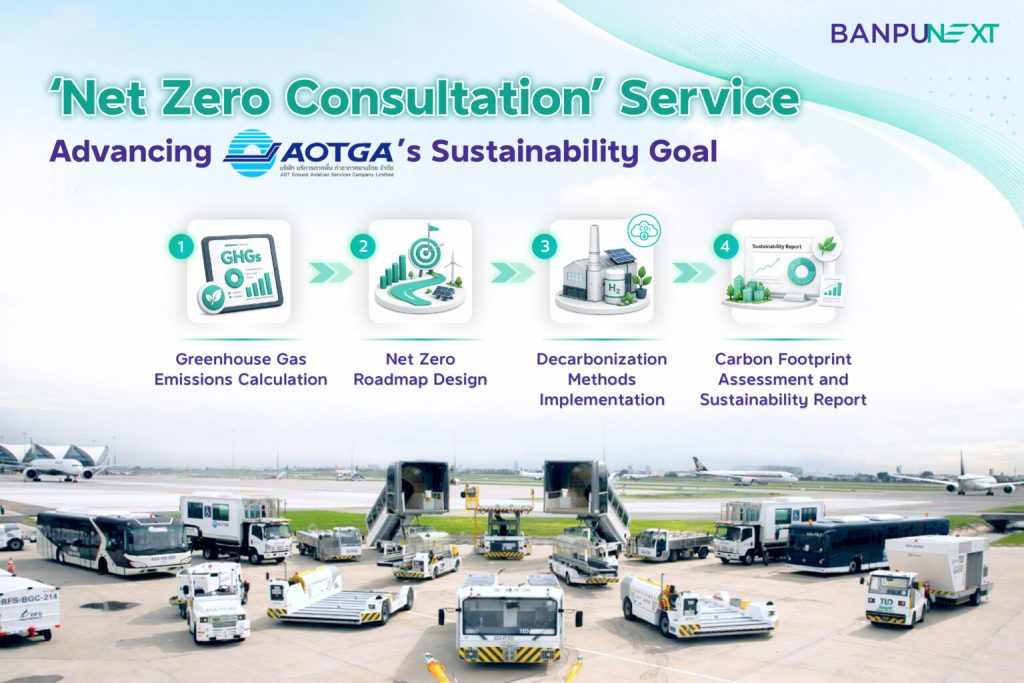
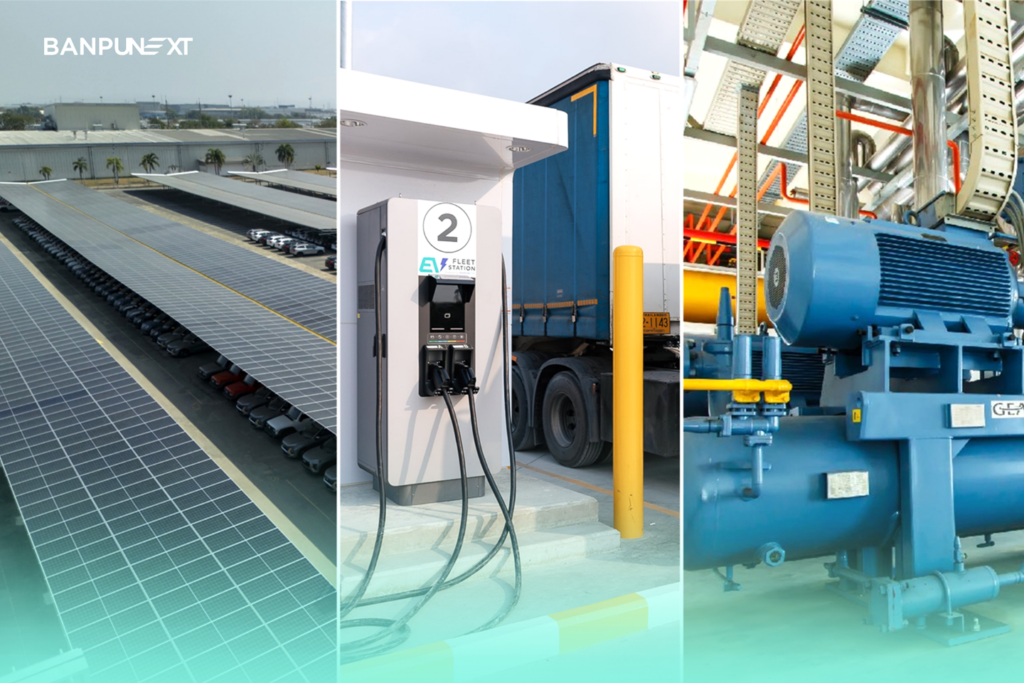
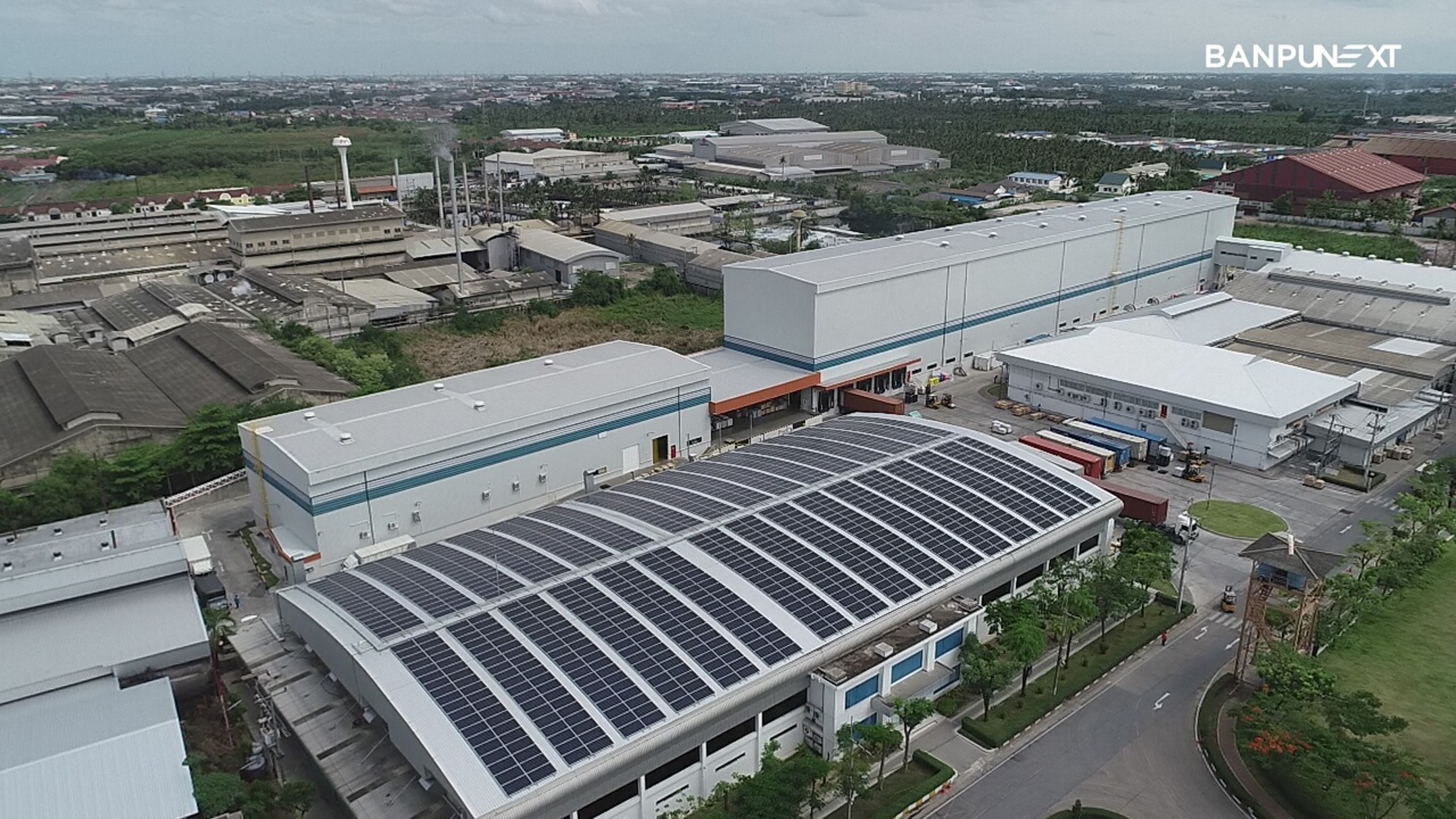
Banpu NEXT offers comprehensive Net Zero Consultation services to help all industries, particularly the manufacturing and export sectors, prepare for these challenges. These encompass Carbon Footprint for Organization (CFO) and Carbon Footprint for Product (CFP) assessment and reporting across scope 1 to 3, carbon credit registration services, carbon monitoring and management through digital platforms, implementation of decarbonization methods, sustainability reporting in accordance with international standard frameworks, and organizational planning toward Net Zero targets. These systematic management approaches enable businesses to reduce long-term costs arising from carbon tax measures, strengthen credibility with international business partners, and sharpen their competitive edge in global markets.
Mr. Smittipon Srethapramote, Chief Executive Officer of Banpu NEXT Co., Ltd., said, “Carbon regulations and international sustainability standards are reshaping the direction of business operations across the manufacturing and export sectors and many industries worldwide. This transformation is reflected in the adaptation of various industries, from educational institutions pursuing UI Green Metric⁵ certification, to real estate and commercial buildings targeting LEED⁶ or TREES⁷ standards, to Thai industrial estate sector developing into Eco Industrial Town⁸ in accordance with the Department of Industrial Works’ guidelines. All of these require systematic carbon and sustainability management solutions. Banpu NEXT is dedicated to supporting all Thai businesses as a long-term Net Zero partner, leveraging our deep expertise and experience in clean energy technology and Net Zero strategy. We are ready to deliver end-to-end solutions that reduce carbon emissions across all scopes, lower long-term costs, and create stronger growth opportunities for businesses in global markets.”

Banpu NEXT continuously provides Net Zero Consultation services to clients across a diverse range of industries, including manufacturing and export, educational institutions, and airport ground handling businesses. This underscores the company’s capability to develop tailored solutions that precisely address the unique requirements of each business, and its dedication to serving as a key driver in advancing Thailand’s low-carbon industries.
For businesses interested in Banpu NEXT’s comprehensive Net Zero Solutions, please contact Call Center at Tel. 02-095-6599 or visit www.banpunext.co.th for more information.
Remark:
*The EU’s Carbon Border Adjustment Mechanism (CBAM) requires importers of carbon-intensive goods entering the European Union (EU) to bear carbon costs in alignment with those applied to goods produced within the EU. This mechanism is designed to prevent carbon leakage — a phenomenon that occurs when the production of high-carbon goods is relocated to countries with less stringent emissions regulations before being re-exported back into the EU. It also serves as an incentive for trading partners to transition toward more environmentally friendly production processes.
References:
1 Thai Customs Department: Preparation Guide for Business Operators on the Implementation of EU CBAM; and Office of the Permanent Secretary, Ministry of Commerce: Carbon Border Adjustment Mechanism: CBAM
2 Federation of Thai Industries: Understanding Carbon Tax
3 Royal Thai Embassy in Brussels: Digital Product Passport (DPP) and Its Implications on Business
4 SET Sustainability: Sustainability Disclosure and Reporting
5 UI Green Metric: The Global Benchmark for Institutional Sustainability and Environmental Leadership
6 U.S. Green Building Council: LEED Rating System
7 Thai Green Building Institute: About Thai Green Building Institute
8 Ministry of Industry: Ministry of Industry, through the Department of Industrial Works: Eco Industrial Town Development and Upgrading Project